What Is Sea Moss? Nutrition, Traditional Uses and What to Know Before Taking It
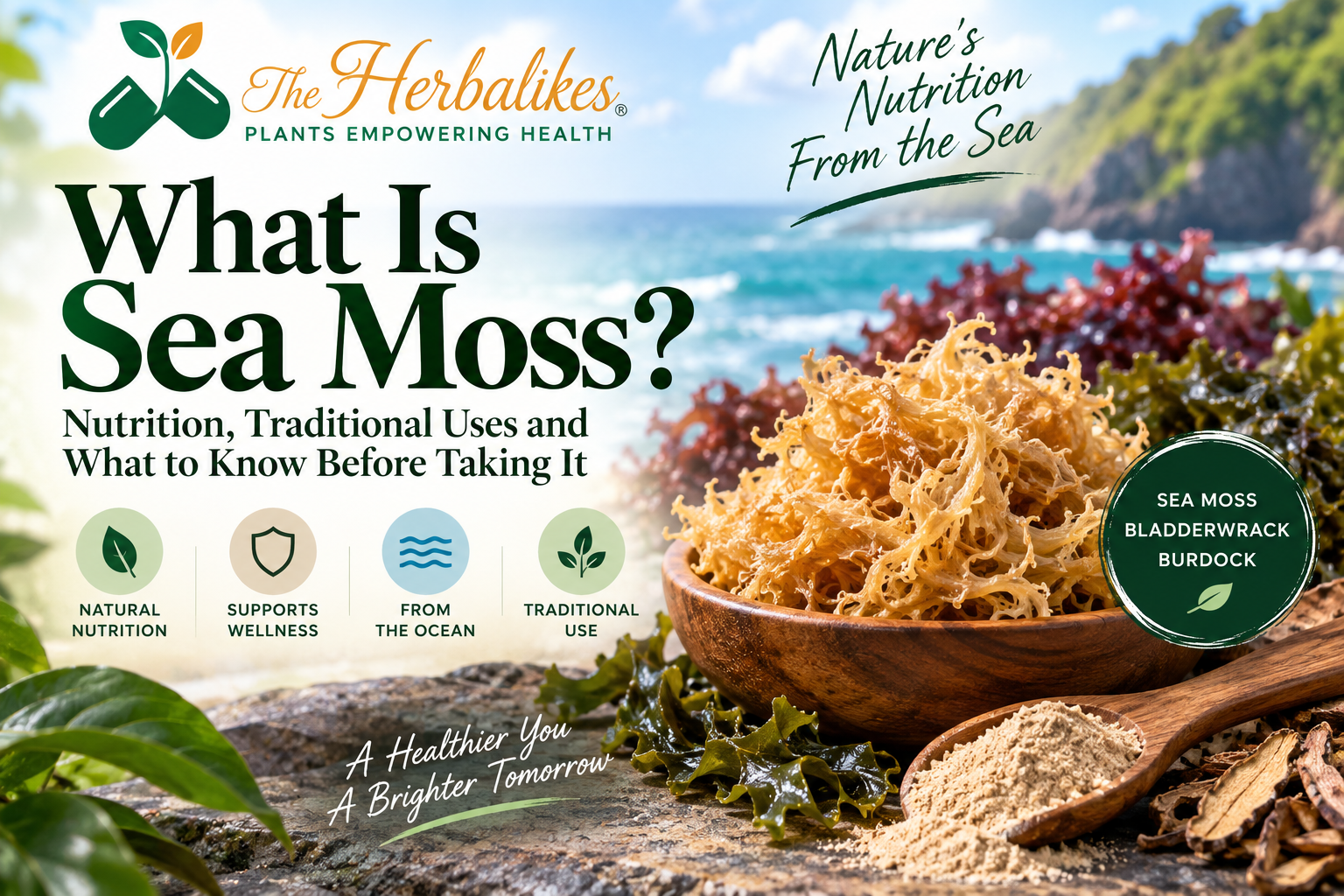
Sea moss has become one of the most talked-about sea vegetables in the wellness world, but its use is not new. Seaweeds have been consumed as foods in different cultures for generations and naturally contain a variety of nutrients and minerals.
Today, sea moss is available in several forms, including dried seaweed, gels, powders and capsules. Before adding it to your daily routine, however, it is worth understanding what sea moss is, what it contains and why moderation matters.
Understanding Sea Moss
Sea moss is a type of red seaweed. Like other sea vegetables, it grows in marine environments and absorbs minerals and other substances from the surrounding water.
This mineral content is one reason this sea vegetable has attracted attention as a dietary ingredient. However, the exact nutritional composition of seaweed can vary considerably depending on the species, where it was grown, environmental conditions and how it was processed.
That means this marine botanical should be viewed as one component of a balanced wellness routine rather than a miracle source of every nutrient your body needs.
Sea Moss and Minerals
Sea vegetables can provide minerals and trace elements. One nutrient particularly associated with seaweed is iodine.
Iodine is an essential mineral that the body needs to produce thyroid hormones. Those hormones are involved in important processes throughout the body.
But more is not necessarily better.
The iodine content of seaweed can vary, and excessive iodine intake can cause health problems in some people. This is an important reason to follow product directions and avoid assuming that taking larger amounts of a sea moss product will produce greater benefits.
Traditional and Modern Use of Sea Moss
Seaweed has a long history as food in coastal cultures around the world. In modern wellness routines, this sea vegetable is often incorporated into smoothies, foods, gels or dietary supplements.
Some people prefer capsules because they provide a convenient way to incorporate sea moss into an established routine without preparing a gel or adding seaweed directly to meals.
Regardless of the form you choose, sea moss should complement—not replace—a varied diet containing nutritious whole foods.
The Herbalikes Sea Moss Plus Formula
The Herbalikes Sea Moss Plus combines three botanical ingredients in one capsule formula:
Sea Moss — a sea vegetable naturally containing various minerals.
Bladderwrack — another type of seaweed traditionally used in botanical preparations.
Burdock — a plant with a long history of traditional herbal use.
Each bottle contains 90 capsules, providing a convenient way to incorporate these botanicals into an everyday wellness routine.
Suggested Use: Take 2–4 capsules daily.
If you’re considering adding these botanicals to your routine, you can explore The Herbalikes Sea Moss Plus to review the complete product information and ingredients.
Why Quality and Responsible Use Matter
Dietary supplements should be approached thoughtfully, even when their ingredients are natural.
Seaweed can accumulate substances from the water in which it grows, and mineral concentrations can vary. This makes product sourcing, processing and responsible use important considerations.
It is also important to remember that dietary supplements are not substitutes for a nutritious diet, adequate sleep, regular physical activity and appropriate medical care.
Who Should Be Particularly Careful?
Because sea moss and bladderwrack can contain iodine, people with thyroid conditions should speak with a qualified healthcare professional before using products containing these seaweeds.
You should also consult a healthcare professional before beginning a new dietary supplement if you are pregnant or nursing, take prescription medication, have an existing medical condition or have concerns about how an ingredient may affect you.
Learn More About Seaweed and Dietary Supplements
Reliable information is particularly important when researching herbal products and dietary supplements.
For independent information about dietary supplements and complementary health practices, visit the National Center for Complementary and Integrative Health (NCCIH).
You can also learn more about iodine, including recommended intake levels and food sources, from the National Institutes of Health Office of Dietary Supplements.
Building a Sustainable Wellness Routine
No single herb, supplement or food determines overall wellness.
A sustainable routine combines nutritious foods, appropriate hydration, physical activity, adequate rest and informed decisions about any supplements you choose to use.
Sea moss can be one part of that bigger picture.
At The Herbalikes, our goal is to encourage people to learn about the plants and botanical ingredients they choose while making thoughtful decisions about their personal wellness routines.
Plants empowering health.
FDA Disclaimer: These statements have not been evaluated by the Food and Drug Administration. This product is not intended to diagnose, treat, cure, or prevent any disease.